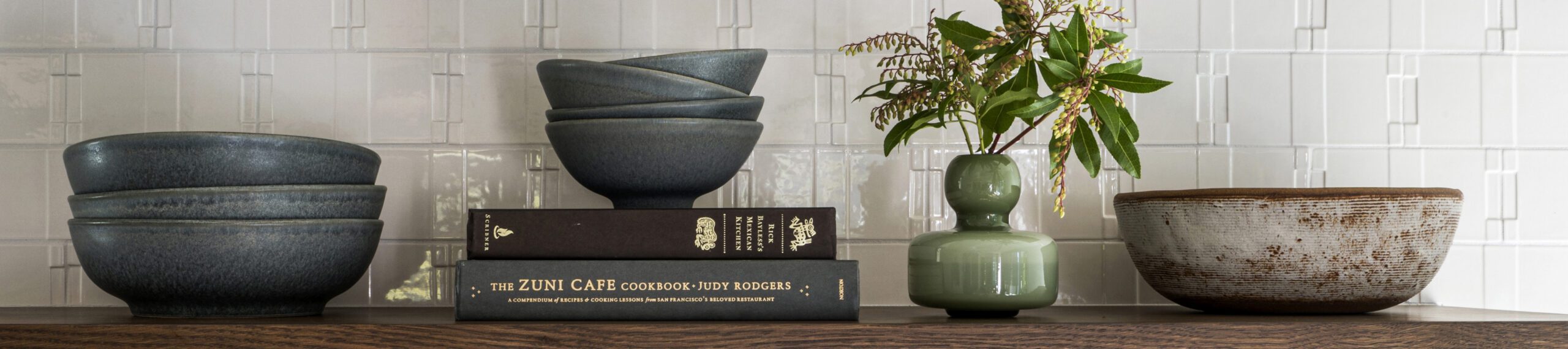

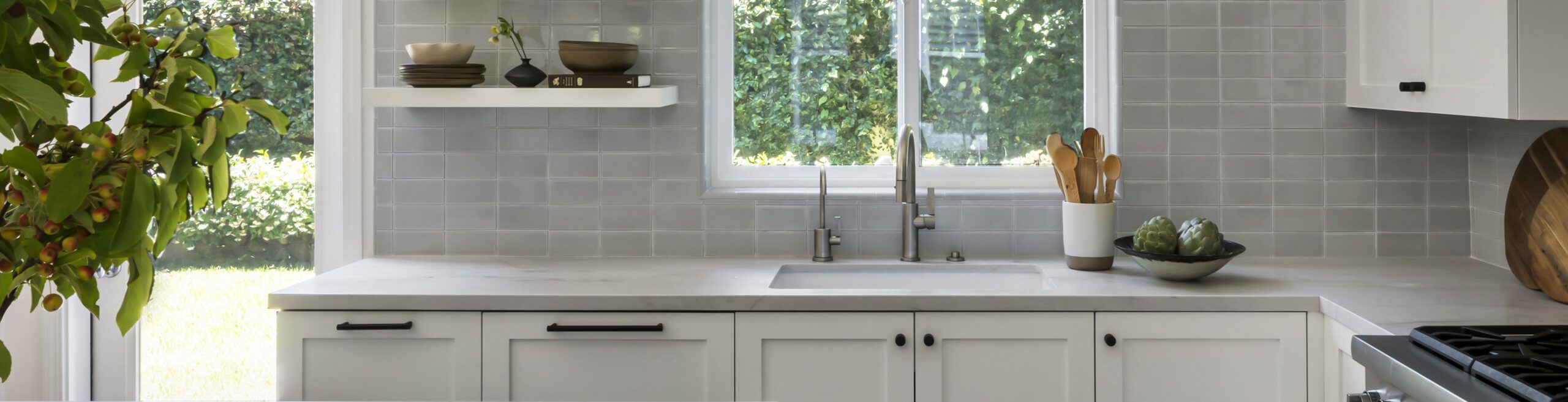
Styling shelves seems easy until you try it! However, how you layer and arrange your objects can completely shift the energy of a space, so give it a try!
Not everything needs to be displayed. Shelf styling is as much about editing as it is about arranging. The key is restraint, balance, and a little imperfection.
The best shelves feel gathered over time, with a thoughtful mix of books, art, ceramics, natural elements, and meaningful objects, telling a quiet story about the people who live in the home. Make sure to look at what you already own, before purchasing anything new.
Here are a few principles we return to again and again when styling shelves for our clients.
1. Clean Slate
Remove everything and wipe down your surfaces. This gives you a chance to see the shelves as a whole and start with fresh eyes.
2. Anchor with Larger Items First
Place your largest pieces first, like a large vase, a stack of books, or a large sculptural object.
3. Use Books as a Foundation
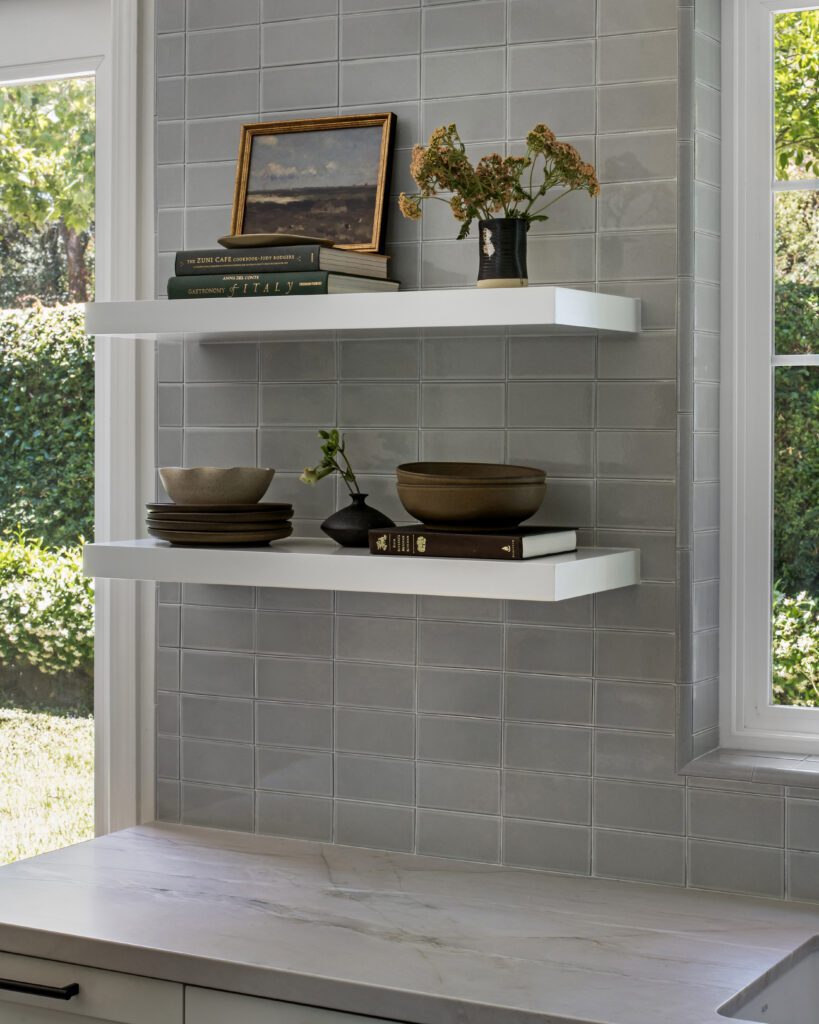
Books are one of the most useful styling tools. They add color and scale, and also act as a base for small bowls, objects, or framed pieces. Mix vertical rows with horizontal stacks to create rhythm.
Make sure to use or purchase books that have meaning to you, show your interests, hobbies or travels.
4. Vary Shape, Height, and Material
A shelf becomes more interesting when the objects don’t all speak the same language. Mix tall and low pieces, matte and glossy finishes, old and new elements. You want some common theme without anything ever really matching.
We often use ceramics, framed art, stone objects, wood, vintage boxes, flowers, branches, and sculptural forms. This contrast gives the shelves dimension and keeps them from feeling flat.
5. Layer in Art
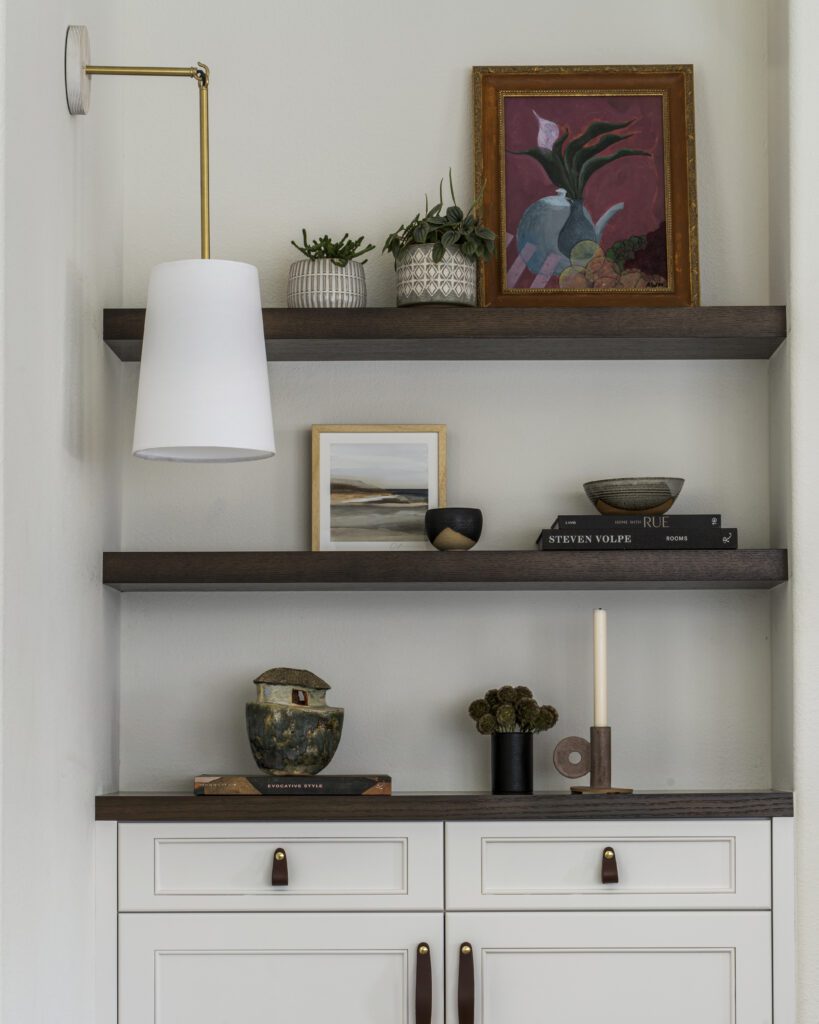
Small-scale art is one of the easiest ways to elevate a shelf. A framed drawing, painting, textile, or photograph can be leaned against the back of the shelf to create depth.
Art also helps break up books and objects. It adds color, mood, and a more personal point of view. For a layered effect, place a small piece in front of the frame rather than keeping everything lined up.
6. Leave Room to Breathe
One of the most common mistakes is using too many small accessories. When every inch is filled, nothing stands out.
Negative space is important. A single vessel or framed artwork can have more impact when it has room around it. Some shelves can feel fuller, while others should be quieter. That mix creates a more natural composition.
7. Aim for Balance, Not Symmetry
Symmetry can be helpful but too much matching can feel stiff. Instead, think in terms of visual balance.
If one side has a tall vase, the other might have a vertical stack of books or a framed piece. If one shelf feels heavier, let the next one feel lighter. The result should feel intentional, not overly arranged.
8. Add Something Organic
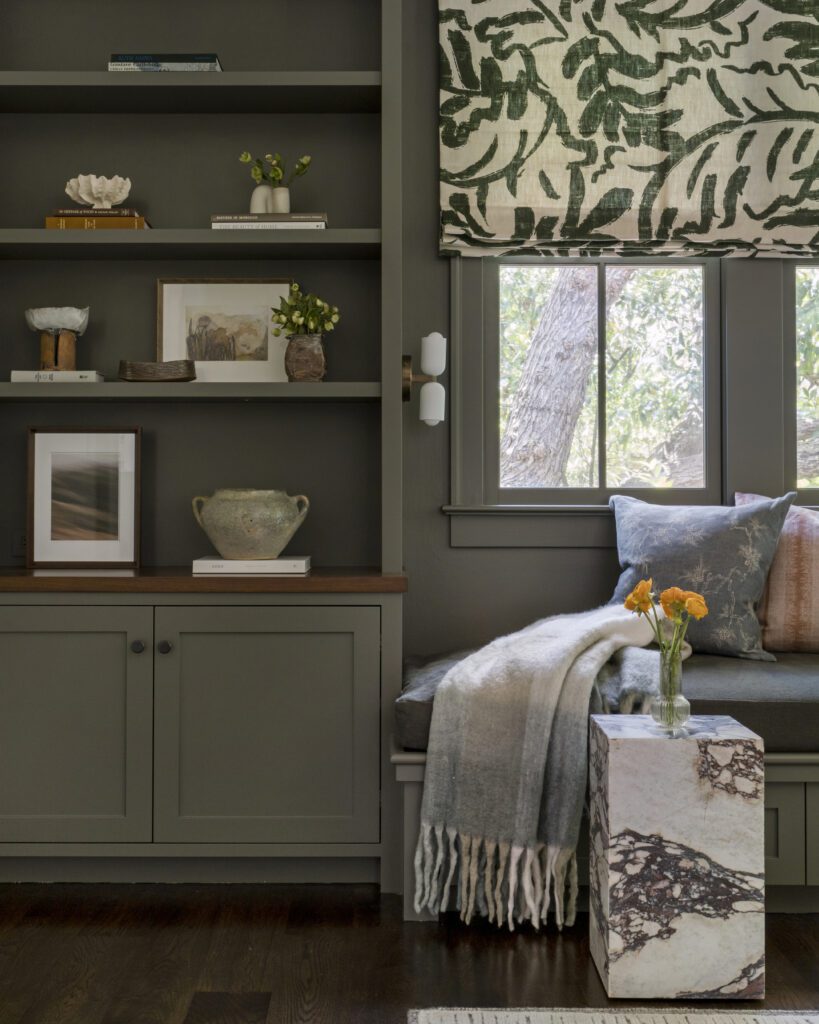
Branches, flowers, or a small plant can soften the lines of shelves and bring movement to a room. Even a simple stem in a small vase can make a shelf feel more alive.
This is especially helpful in spaces with a lot of cabinetry or hard surfaces. A natural element keeps the styling from feeling too static.
9. Edit Until It Feels Easy
Shelf styling usually takes a few rounds. Place everything, step back, adjust, remove, and try again.
A good trick is to take a photo. The camera often shows what the eye misses: too many small pieces, objects that are too evenly spaced, or one area that feels too heavy.
The final result should feel collected, not crowded.

Leave a Reply
popular reads


Be the first to comment